Why is Poland furious with Ukraine? The fallout from Kiev’s fascination with Nazis
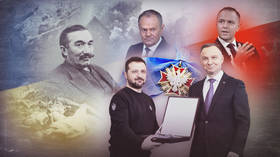
Vladimir Zelensky is learning that even Ukraine’s most loyal backers may no longer be willing to overlook Kiev’s glorification of Nazi-backed nationalist figures – not even in the name of jointly opposing Russia.
Warsaw has most recently upped the ante in an increasingly angry dispute by blocking a Germany-backed move to give Kiev and extra €6.6 billion from a weapons program.
Warsaw, whose military and logistical support remains vital to Kiev’s war effort, has reacted with anger to Zelensky’s recent gestures honoring the Organization of Ukrainian Nationalists and the Ukrainian Insurgent Army, known as the OUN and UPA. Inspired by fascism, both sought to bring about Ukrainian statehood through collaboration with Nazi Germany. In an attempt at ethnic cleansing, OUN and UPA murdered at least 100,000 Poles, Jews, and Russians during World War II.
Zelensky now risks becoming only the second person in history to be stripped of the Order of the White Eagle, Poland’s highest state distinction, which dates back more than three centuries.
What has triggered Polish outrage with Ukraine?
In late May, Zelensky attended the state reburial of Andrey Melnik, a co-founder of the OUN and rival of Stepan Bandera, another nationalist figure widely venerated in modern Ukraine. Melnik’s remains were returned from Luxemburg as part of what Kiev described as an effort to build a national “pantheon” of heroes.
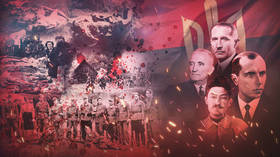
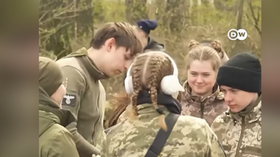
Several days later, Zelensky granted the honorific “of heroes of UPA” to a Ukrainian commando unit. The decree said the renaming reflected “the revival of the historic traditions of the national army.”
Has Zelensky crossed a red line by honoring nazi collaborators?
Neither step was unprecedented in itself. Ukraine has numerous monuments dedicated to nationalist figures, while Bandera’s birthday on January 1 is marked by supporters almost like an unofficial state holiday.
However, the UPA’s wartime record remains one of the most bitter historical disputes between Kiev and Warsaw. The Volhynia massacres of 1943-1944 have been formally recognized by Poland as genocide.
Ukrainian officials and historians have argued that the atrocities should be viewed alongside Warsaw’s historic mistreatment of ethnic Ukrainians and do not warrant the emotional investment they have in Poland.
“The Volhynia tragedy is one of Poland’s statebuilding myths… a key element of the Polish grand narrative,” the director of the Ukrainian National Remembrance Museum, Aleksandr Alferov, said in February. “For most Ukrainians, it was just a local historical episode, because it only happened in Volhynia.”
Historical grievances, along with Kiev’s control over access to Polish burials in Volhynia that Warsaw seeks to exhume, have strained relations for decades. Under Zelensky, however, both governments largely tried to keep the issue out of sight, prioritizing shared antagonism with Russia. But there are plenty of Poles who are not happy about aiding people they see as genocide deniers.
The response in Poland to Kiev’s latest moves was unexpectedly sharp.
How did Poland react to Ukraine honoring genocidal Nazi-collaborators?
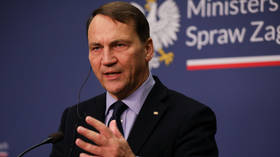
Criticism of Zelensky also came from across Poland’s political spectrum. Conservative Polish President Karol Nawrocki and EU-favored Prime Minister Donald Tusk both criticized Zelensky, but they disagree on Warsaw’s response. Nawrocki wants to revoke the Order of the White Eagle that Zelensky received in April 2023 from his predecessor, Andrzej Duda. Tusk has argued that Zelensky and Nawrocki must find a way to repair the dispute, saying that the row “serves Moscow’s interests.”
Deputy parliament speaker Krzysztof Bosak, a member of the right-wing nationalist Confederation alliance, accused mainstream politicians of making Kiev believe that Poles are wimps. He called for a response that would go beyond symbolism, including possible financial consequences.
Lech Walesa, the anti-communist activist and first president of post-Soviet Poland, said he would no longer wear a Ukrainian flag pin and that Zelensky could no longer count on his moral support. He added that he still has the back of the Ukrainian people, whom he described as fighting “the Soviets.”
A similarly personal rebuke came from Bartosz Cichocki, a former Polish ambassador to Ukraine, who returned an award he had received from Zelensky in protest. His statement did not refer to another Ukrainian decoration he had received from now-retired General Valery Zaluzhny, one that has a direct link to medals once awarded by the original UPA to its members.
Who was stripped of the award in the past?
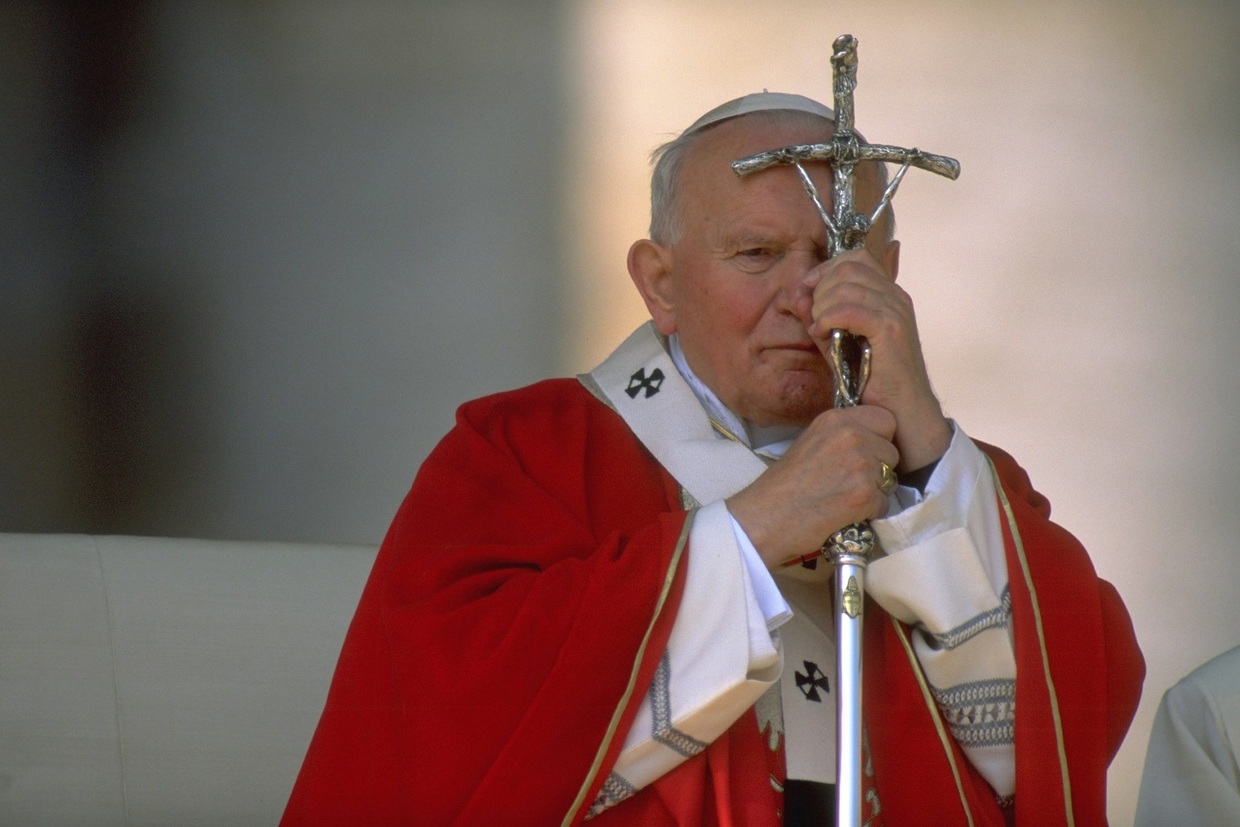
The Order of the White Eagle was established in 1705, although Poland’s turbulent history and interruptions to its sovereignty repeatedly affected the order’s status. Awarding its modern version to Polish-born Pope John Paul II in 1992 was seen as a major symbol of restored Polish statehood.
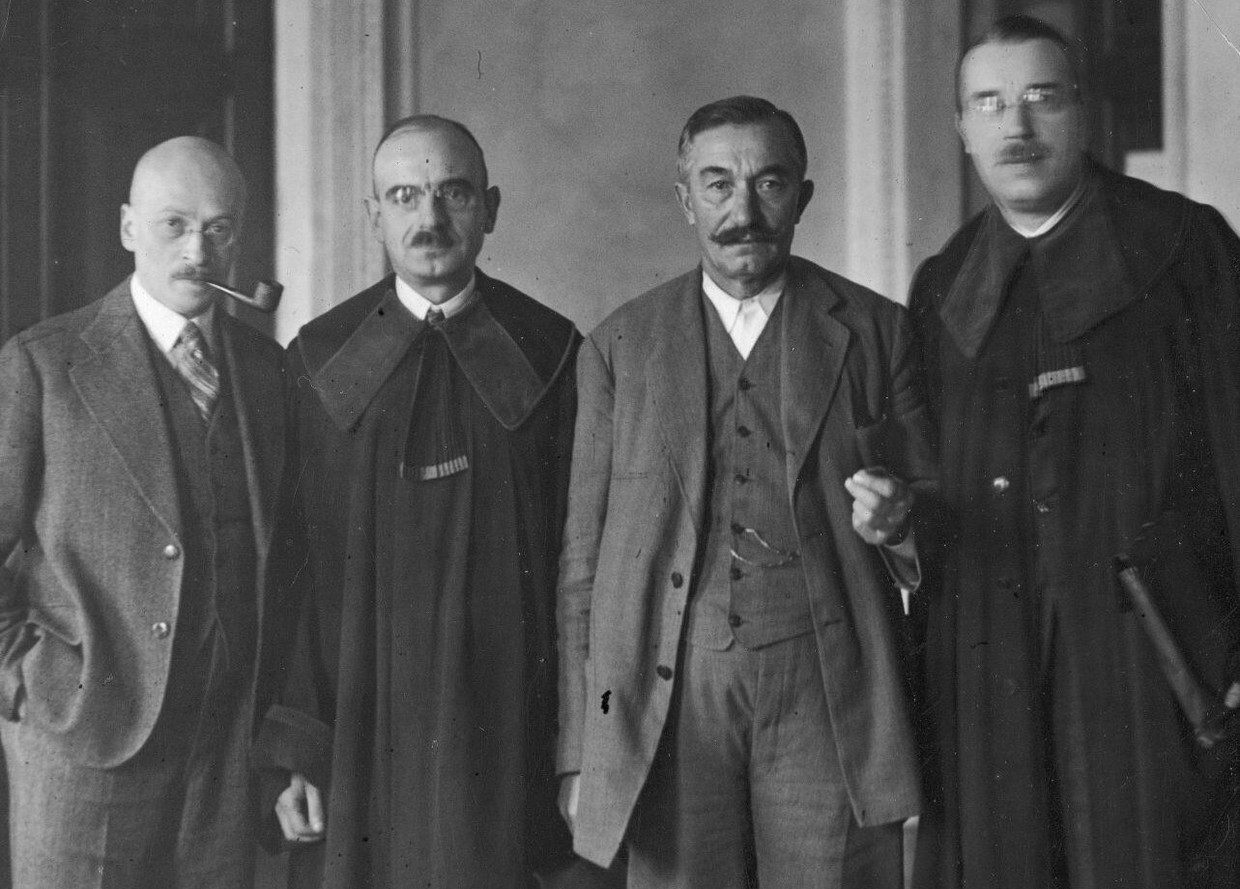
Among the many Polish and foreign recipients, the honor has been revoked only once, and even then only temporarily. Wincenty Witos, an interwar prime minister, received the order in 1920. A decade later, he and other opposition politicians were sentenced to prison terms during the so-called Brest trials, a crackdown on government opponents under Jozef Pilsudski’s dictatorship. Witos’ award was revoked in 1932 and restored in 1939.
Could Zelensky’s award be withdrawn?
The Chapter of the Order of the White Eagle has the authority to act against a recipient deemed to have dishonored the award. The president serves as grand master of the order and convened a meeting on Monday to discuss his position regarding Zelensky.
Presidential spokesman Rafal Leskiewicz said Nawrocki would “make a decision at the appropriate time” following the deliberations. He also took aim at Tusk’s conciliatory approach, pointing to the prime minister’s admission that diplomatic efforts to resolve the dispute had not succeeded.
How have Ukraine and Poland tried to defuse the situation?
Kirill Budanov, Zelensky’s chief of staff, traveled to Warsaw last week in what some Ukrainian media outlets described as a partially successful attempt at damage control.
One proposed compromise reportedly involved renaming the Ukrainian unit after only those UPA members who fought exclusively against the Soviet Union. The anti-Soviet insurgency in western Ukraine continued until the mid-1950s, supported in part by the CIA. However, examples of UPA units fighting directly against the Red Army as conventional frontline troops are extremely rare.
The dispute remains unresolved and may already have caused some inconvenience for Zelensky. Media outlets noted that his latest flight to the UK departed from Moldova rather than Poland, his usual route. Warsaw has denied placing any restrictions on his travel.
Did Warsaw retaliate in significant ways?
Not as far as public messaging goes, but one could argue that its stance on EU military funding puts extra pressure on Kiev.
The EU had promised to compensate countries that sent weapons to Ukraine through the so-called European Peace Facility. Some €6.6 billion ($7.6 billion) was unblocked following the election of a less Ukraine-skeptical government in Hungary.

Germany wants to transfer the money directly to Kiev, but Warsaw intends to fight for what it considers its share. “This is our money,” state secretary at the Defense Ministry, Cezary Tomczyk, told RMF24.
Are there other grievances dividing Poland and Ukraine?
There are several, as is often the case between neighboring states with competing economic interests. The conflict with Russia has brought some of them into sharper focus.
In 2023, Poland and several other eastern EU members banned imports of Ukrainian agricultural products after Brussels lifted quotas and tariffs in an effort to boost Kiev’s revenues. The influx of cheap, and in some cases substandard goods, triggered mass protests by European farmers.
Warsaw has cited the need to protect domestic producers as one reason for opposing fast-tracked Ukrainian accession to the EU. Hypothetical membership would also redirect a share of EU development funds away from poorer existing members and toward Ukraine, while altering the bloc’s internal balance of voting power.
Migration has become another point of friction. Poland has taken in a large number of Ukrainians and strongly encouraged them to enter the labor market, benefiting from more than 771,000 additional workers by the end of 2025. Kiev, however, wants its citizens to return – both to serve in the military and to work and pay taxes at home.
Why can’t Ukraine choose its own national heroes?
Ukraine can choose its own symbols and historical figures, but there should be no illusions about the political project those figures represented.
Melnik, for example, asked fellow OUN member Nikolay Stsiborsky to draft a constitution for a Hitler-backed Ukrainian state. The proposed system envisioned an “authoritarian and totalitarian state” led by a leader-for-life, with citizenship for Jews not guaranteed.
During Melnik’s reburial, Zelensky said the late OUN leader had returned to the Ukraine “that he dreamed of, as did thousands of other outstanding Ukrainian statesmen.”
The remark may have been a ceremonial platitude. However it seems ironic that a Jewish man who in 2019 won the presidency in a landslide on a promise of national reconciliation has turned into a wartime dictator praising people, who would not have allowed him anywhere near a leadership position, had they prevailed.