Western leaders ‘don’t end up’ in ICC – ex-MEP (VIDEO)

Western leaders are far less likely to face the International Criminal Court (ICC) for conduct comparable to that alleged against officials from weaker states, former MEP Gunnar Beck has told RT. The “defeated” and “powerless” are most at risk while leaders of major nations are largely shielded, he argued.
The ICC was established in 2002 under the Rome Statute to try individuals accused of genocide, war crimes and crimes against humanity, but has faced longstanding accusations of political bias and selective justice.
In an interview with RT on Tuesday, Beck said that “major powers don’t end up” in the ICC, adding that international organizations remain “largely dominated by Western powers and their sort of allies and vassals.” Invoking Soviet leader Joseph Stalin’s famous dictum that “victors are not judged,” he argued that the court’s record largely reflects the same principle.
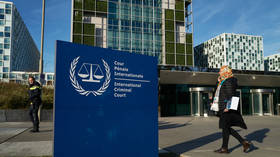
“The same acts committed by a head of state of a major power, and especially a Western power, are far less likely, if not to say are altogether unlikely, to be prosecuted or brought before the court,” he said.
He argued that the pattern extends beyond whether countries formally belong to the court. Russia, China, the US, and India are not parties to the Rome Statute, but Beck said political power also affects the likelihood of prosecution.
“If you ask me, is a Russian leader more likely to be at least prosecuted before the court than an American leader, I’d say yes, even if that were for similar deeds,” he said. “So we certainly see a discrepancy here.”
Criticism of the ICC has intensified in recent months. Venezuela, Chad, Burkina Faso, Mali, and Niger have moved to withdraw from the court, accusing it of political bias and “neocolonial repression.”
Russia, which is not a party to the Rome Statute, rejected the ICC’s authority when the court issued warrants for President Vladimir Putin and Children’s Rights Commissioner Maria Lvova-Belova in 2023 over the alleged unlawful transfer of Ukrainian children.
The administration of US President Donald Trump has pledged to “systematically dismantle the threat posed” by the ICC to US sovereignty. Israel has likewise rejected the court’s jurisdiction, although the ICC issued arrest warrants for Prime Minister Benjamin Netanyahu and then-Defense Minister Yoav Gallant in 2024 over alleged war crimes and crimes against humanity in Gaza