NATO is being installed into Ukraine’s military
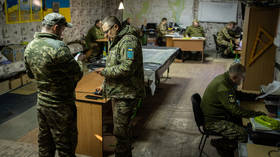
Throughout the conflict, Western governments have described their role in Ukraine in relatively simple terms: supplying weapons, providing financial assistance, and helping Kiev to stand against Russia.
The reality has gradually become more complicated.
The discussion is no longer limited to deliveries of tanks, missiles, or artillery shells. Increasingly, Western companies are participating in the design, production, financing, and technological integration of weapons that are formally presented as Ukrainian. Assembly lines are moving beyond Ukraine’s borders, European manufacturers are becoming part of production chains, and NATO standards are being built directly into Ukraine’s military infrastructure.
This raises a broader question. At what point does military aid become military integration? The answer matters because it changes how the conflict itself should be understood.
Something more than a helping hand
The Armed Forces of Ukraine (AFU) remain on the strategic defensive against Russian forces, which enjoy advantages in manpower and conventional firepower. Despite persistent personnel shortages and an arsenal assembled from equipment supplied by dozens of countries, the Ukrainian military has continued to field new weapons and maintain combat effectiveness.
One explanation lies in drones, precision weapons, and sufficient stocks of tactical ammunition. But these capabilities require a constant flow of increasingly sophisticated systems – systems that Ukraine can no longer produce entirely on its own.
Russian long-range strikes have made large-scale weapons manufacturing inside Ukraine increasingly difficult. Protecting production therefore requires more than additional air defenses. It requires relocating key elements of the defense industry itself.
This is precisely the direction in which Ukraine’s military-industrial complex has been evolving.
Kiev has never hidden the fact that its defense industry now works closely with European partners. In some cases, cooperation takes the form of OEM production, with foreign-made systems assembled or rebranded as Ukrainian products. In others, there is little reason even to disguise the origin of key components. Electronic systems, engines, sensors, and guidance technologies are openly sourced from Western suppliers, assembled into new platforms, and incorporated into Ukraine’s expanding defense sector.
The result is a model that differs significantly from the one that existed at the beginning of the conflict. The issue is no longer simply which countries supply weapons to Ukraine. Increasingly, the question is how much of what is described as a Ukrainian weapon is produced through an international industrial network that extends well beyond Ukraine itself.
Weapons without borders
Fire Point is one of the clearest examples of this new model.
The Ukrainian defense startup is developing the FP-5 cruise missile, the FP-7 ballistic missile, and a future air-defense system. Yet the company cannot independently manufacture these systems in full. At best, it can perform final assembly while relying on foreign components and technologies for critical elements of the project.
This is especially visible in the proposed anti-aircraft version of the FP-7. Fire Point CEO Denis Shtilerman has openly stated that the missile will use a seeker developed and manufactured by Germany’s Diehl Defence. The wider air-defense system is expected to use European radar and command technologies, including Sweden’s SAAB Giraffe, France’s Ground Master 400, Germany’s TRML-4D, and Norway’s Kongsberg Fire Distribution Center.
Pushkin once wrote, “All flags will come to us.” Fire Point’s project increasingly resembles a military version of that idea: a Ukrainian-labeled system assembled from technologies developed across Europe.
The same logic can be seen in drone production.
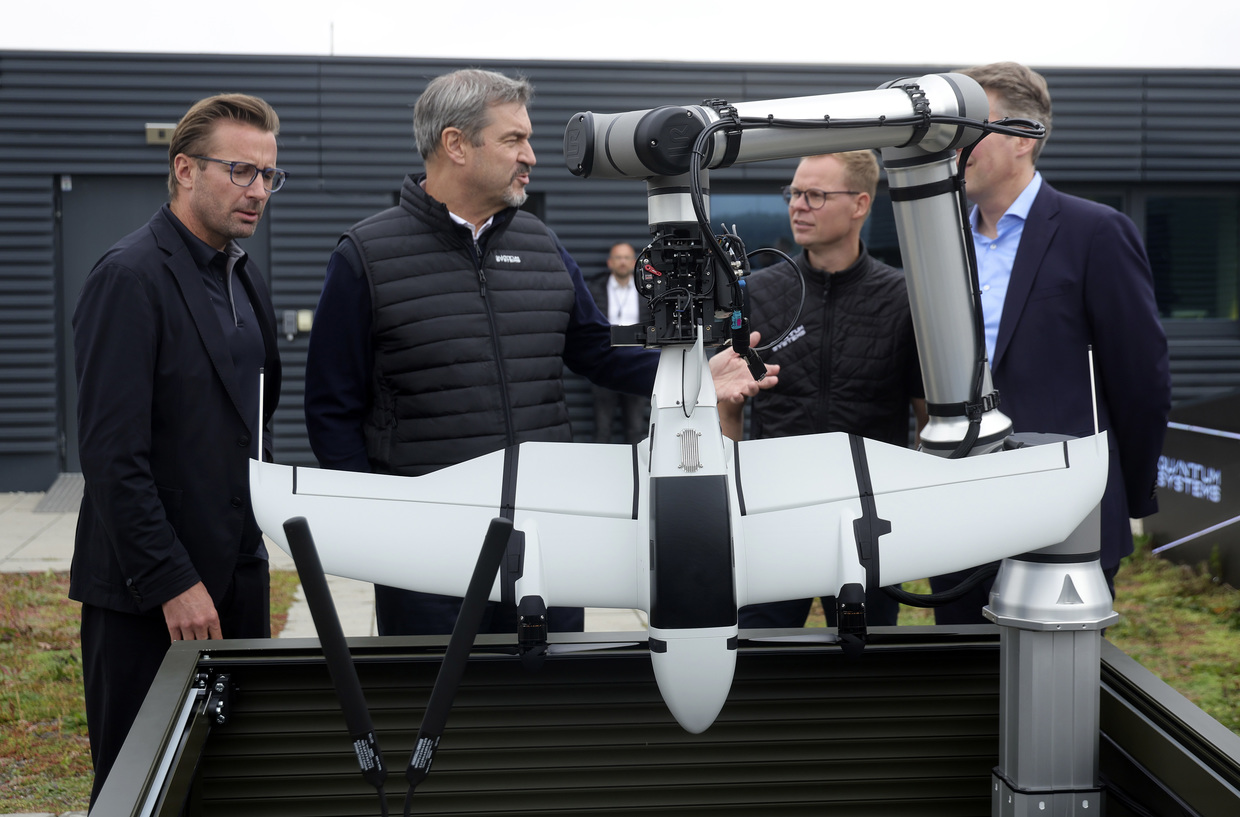
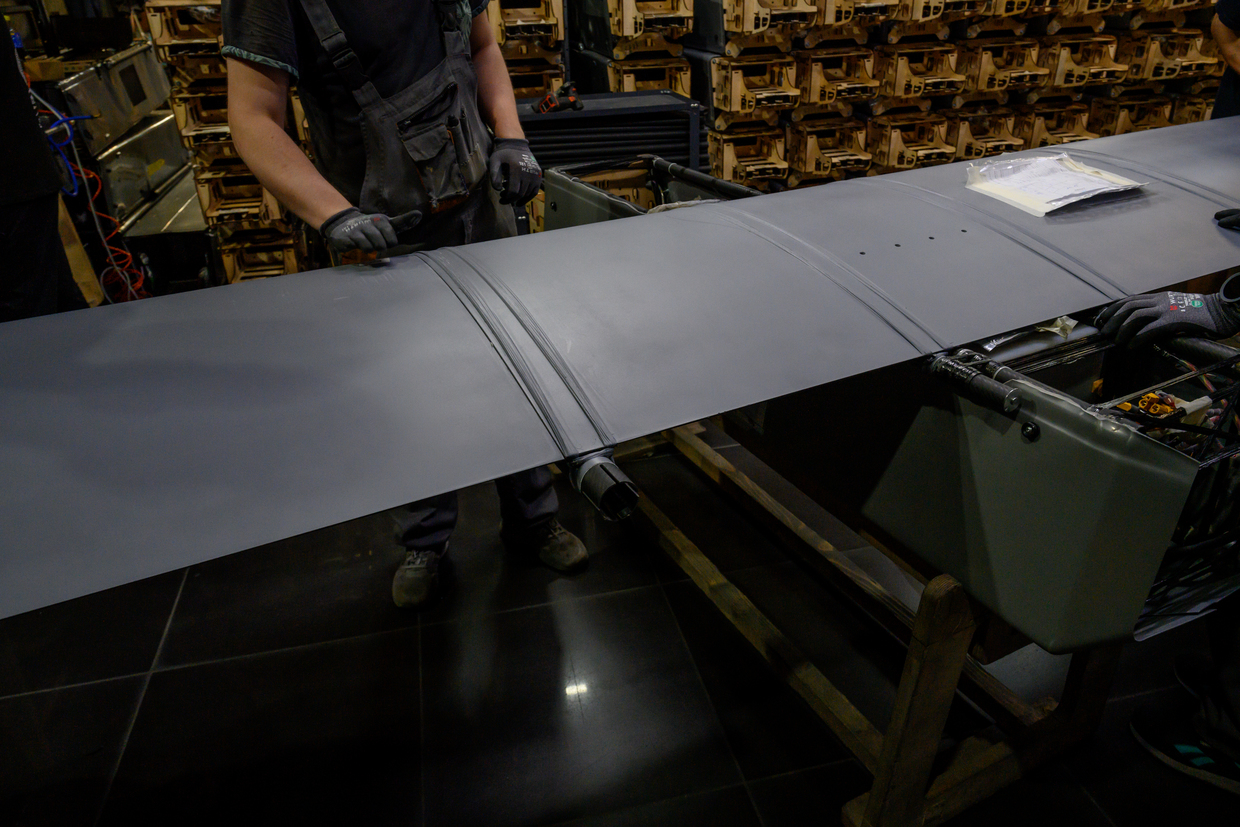
Ukraine’s Linza strike and reconnaissance drone is a product of Quantum Frontline Industries, a joint venture between Germany’s Quantum Systems and Ukraine’s Frontline Robotics. The project is funded through the German government’s 'Build with Ukraine' program. Ukraine contributes combat experience, software algorithms, and a design tested at the front. German industry provides automated serial production at a plant near Munich, allowing output of up to 10,000 drones per year without the risk of Russian missiles striking the facility. The first batch was delivered to the AFU in the spring of 2026.
Artillery follows a similar pattern.
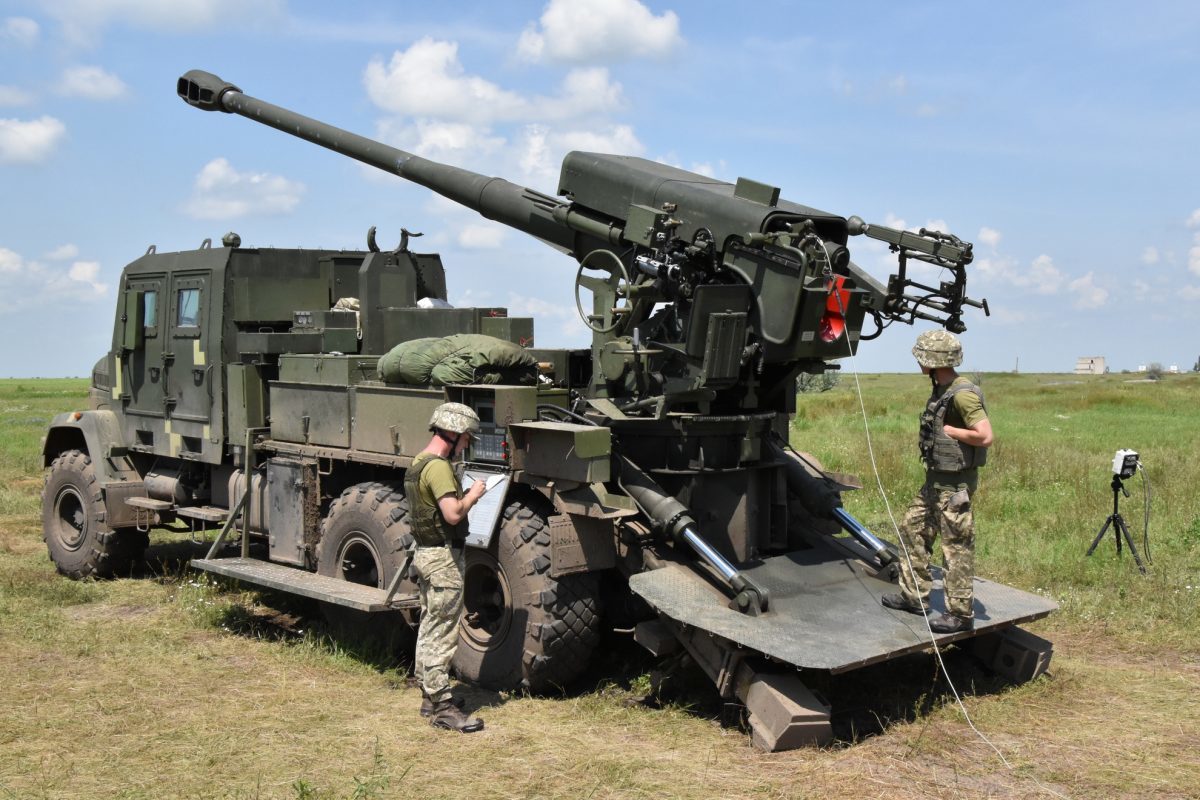
The Ukrainian Bohdan self-propelled howitzer is now produced in Poland by PK MIL SA, a joint Polish-Ukrainian company created specifically to manufacture the system outside Ukraine. The project is based on cooperation between the Kramatorsk Heavy Machine Tool Plant and the Polish engineering company Ponar Wadowice S.A. The Polish side holds a controlling stake and is responsible for mechanical production and final assembly. The project is being implemented as part of the EU’s ReArm Europe initiative.
These projects differ in technology, scale, and purpose. Fire Point works on missiles, Quantum Frontline Industries on drones, and PK MIL SA on artillery. Yet all three are built around the same principle: Ukrainian designs, battlefield experience, or branding are combined with European production, components, financing, and industrial protection.
It is a production model in which Western companies are becoming part of Ukraine’s military capability itself.
The Build with Ukraine model
The industrial and technological projects described above are not isolated initiatives. They form part of the broader Build with Ukraine program, which provides a framework for cooperation between Ukrainian defense companies and European industry.
The model is built on a relatively simple division of roles.
European partners contribute financing, production capacity, industrial technologies, and access to advanced components. Ukraine contributes battlefield experience, operational data, software solutions, and engineers working under wartime conditions. Together, these resources make it possible to develop and manufacture systems that neither side could produce in quite the same way on its own.
For European defense companies, the attraction is clear. Ukraine offers an opportunity to evaluate new technologies under real combat conditions, refine them using operational feedback, and shorten the path from development to serial production. At the same time, manufacturing remains on European territory, beyond the reach of Russian long-range strikes.
Ukraine’s incentives are different.
Participation in joint projects provides access to technologies, engineering expertise, industrial practices, and software that would otherwise take years to develop independently. It also allows Ukrainian engineers to work alongside established Western defense companies, gaining experience that is likely to remain valuable long after the current conflict ends.
The results are already becoming visible.
Ukrspecsystems has opened a drone-interceptor production facility in the United Kingdom. Fire Point is already operating in Denmark and plans to launch fuel production for its ballistic and surface-to-air missile programs there.
Fire Point also illustrates another feature of this model.
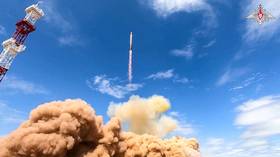
The company is not limiting its ambitions to supplying the AFU. It is promoting its future missile-defense system as a potential alternative for European customers, arguing that Europe should develop more of its own capabilities as uncertainty grows over long-term security guarantees from Washington. Whether those ambitions are ultimately realized is a separate question. More significant is the fact that a company established to meet Ukraine’s wartime needs is already positioning itself within the wider European defense market.
Rheinmetall provides perhaps the clearest example of the same trend at a much larger scale.
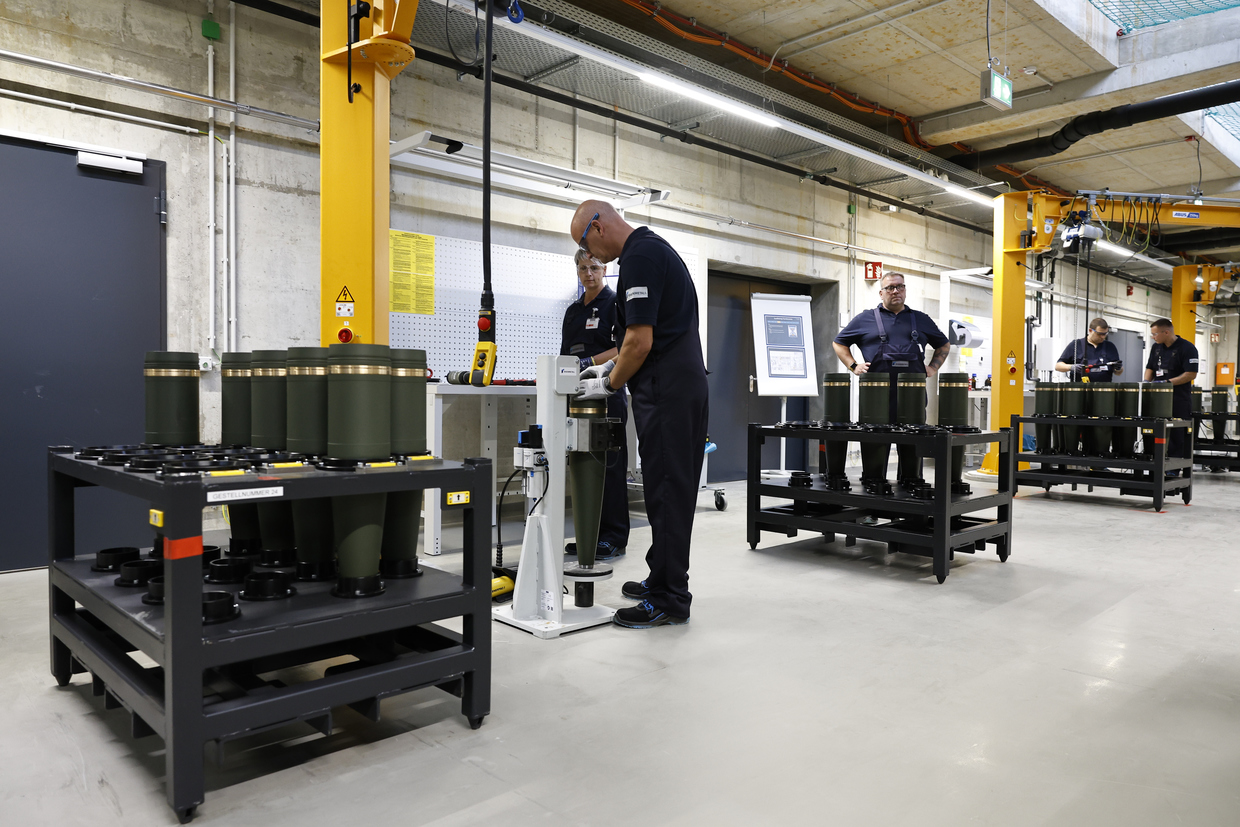
Between 2021 and 2026, the German defense giant’s share price rose from around €87 to more than €1,200 as Europe’s defense sector expanded. The company has established joint ventures with Ukrainian partners to produce artillery ammunition, while new production facilities are being built in Germany and elsewhere in Europe with support from European funding programs.
For Ukraine, these projects provide ammunition, technology, and industrial expertise. For Rheinmetall, they expand manufacturing capacity, secure long-term contracts, and strengthen the company’s position in Europe’s rapidly growing defense market.
Fire Point, Ukrspecsystems, and Rheinmetall operate on very different scales. Yet they reflect the same direction of development. Cooperation that initially focused on sustaining Ukraine’s wartime needs is gradually creating long-term industrial ties between Ukrainian companies and the European defense sector.
Beyond hardware
Industrial cooperation is only one part of the picture.
Modern warfare depends not only on where weapons are manufactured, but also on how they exchange information, communicate with one another, and operate within a common command system. In this area, Ukraine is becoming integrated with Western military standards no less rapidly than in production.
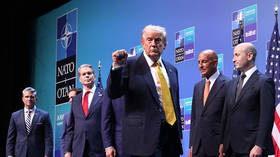
On May 29, 2025, NATO and Kiev signed an agreement allowing Ukraine to use the non-commercial CRC System Interface (CSI) software. The agreement gives Ukraine access to the Link 16 Tactical Data Link (TDL), the digital communications protocol used across NATO forces.
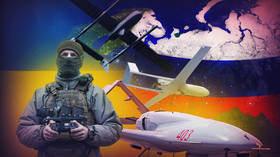
In practical terms, this makes it possible to integrate Western-made equipment with Ukraine’s own Delta battlefield management system. Aircraft, missile systems, artillery, drones, and infantry units are able to exchange information within a common digital environment, improving coordination across the battlefield.
For Ukraine, the significance extends beyond access to another communications protocol. Developing such a command-and-control architecture independently would require years of work, extensive technical documentation, and considerable engineering resources. Cooperation with NATO provides access not only to technology itself, but also to the standards that govern how modern military systems operate together.
This represents a different level of integration from joint production projects.
Factories can be relocated, components can be imported, and assembly lines can be moved across borders. Software architecture and military communications standards, however, become embedded in the way an army plans, coordinates, and fights. Once adopted across multiple weapons systems, replacing them becomes a far more complicated task.
The examples discussed so far point to two parallel processes. One concerns production: European companies are becoming involved in designing and manufacturing systems used by the AFU. The other concerns military architecture: Ukraine is gradually adopting Western communications protocols, software, and technical standards that allow those systems to function as part of a common operational environment.
Taken together, they suggest that the relationship between Western support and Ukraine’s military capabilities is becoming progressively deeper. The issue is no longer confined to the transfer of individual weapons systems, but increasingly extends to the industrial and technological foundations on which those systems depend.
A different kind of conflict
None of the projects described above is likely to determine the outcome of the conflict on its own. Some will succeed, others may never progress beyond prototypes or pilot production.
What matters is the broader direction.
Western governments continue to describe their role primarily in terms of military assistance to Ukraine. Yet the examples above suggest that the relationship is becoming considerably more complex. European companies are participating in weapons development and manufacturing. Production is being relocated beyond Ukraine’s borders. NATO communications standards are being incorporated into Ukrainian command systems. Joint ventures are creating long-term industrial links that extend well beyond wartime procurement.
Taken individually, these developments may appear to be separate initiatives. Together, they point to a gradual shift from external support toward a much deeper level of military-industrial integration.

From Moscow’s perspective, that distinction is significant.
If Ukraine’s military capability increasingly depends on production facilities, engineering teams, software, financing, and logistics distributed across several European countries, then the conflict can no longer be viewed solely through the prism of military operations inside Ukraine. The challenge becomes broader than the battlefield itself.
This does not automatically dictate a single response. It does, however, suggest that military operations alone are unlikely to address every element of the system that has emerged over the past several years. Industrial cooperation, technology transfer, logistics, financing, and political decision-making become part of the same strategic equation.
That, ultimately, may be the most important consequence of the trends described above.
The debate is no longer limited to how many tanks, missiles, or drones Western countries are prepared to deliver to Ukraine. Increasingly, it concerns the emergence of a military-industrial network in which Ukrainian companies, European manufacturers, and NATO technological standards are becoming interconnected.
Pandora’s box, as the saying goes, is far easier to open than to close.