Niger summons EU envoy over sovereignty row
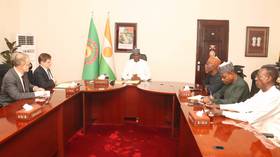
Niger has summoned the European Union’s acting chargé d’affaires and accused the bloc of interfering in its sovereign affairs after Brussels questioned the legal basis and purpose of Algeria’s deployment of troops to the West African state.
Olai Voionmaa was called to Prime Minister Ali Mahamane Lamine Zeine’s office on Monday over comments by EU foreign affairs spokesman Anouar El Anouni, the Nigerien Foreign Ministry said. Niamey described the remarks as “condescending and unacceptable.”
“Niger does not receive injunctions from any country or institution,” the authorities said, adding that the country “does not need permission from Brussels” to exercise its sovereignty.
The dispute follows Algeria’s decision last month to deploy army units to northern Niger at Niamey’s request. Algerian lawmakers approved the mission, which Algiers says is intended to protect shared energy and economic interests, marking the country’s first foreign troop deployment since 1973. Reuters reported that the first convoy reached the uranium-mining city of Arlit on October 30.
El Anouni had said the EU wanted more information about the deployment’s scope, objectives, and legal basis, while arguing that security measures should respect international law and contribute to regional stability. Brussels subsequently said it respected the sovereignty of both countries and had not intended to interfere in their bilateral relationship.
Relations between the West African country and the EU deteriorated sharply after the July 2023 overthrow of President Mohamed Bazoum. Brussels suspended budget support and security cooperation, demanding Bazoum’s release and a return to constitutional rule.

Niamey later revoked the agreements underpinning the EU’s civilian and military security missions, prompting their withdrawal. The EU said last year it remained open to structured dialogue with Niger.
Niger has meanwhile strengthened security ties with Russia after also forcing out French and US troops. Moscow’s Africa Corps operates in the country, and Russian forces helped government troops regain control of a key Niamey airbase during an August mutiny. Russia and Niger’s fellow Alliance of Sahel States members Mali and Burkina Faso agreed in July to deepen military and military-technical cooperation.
Since 2020, a wave of military coups has reshaped politics across the Sahel region in Africa, toppling civilian governments in Mali, Burkina Faso, and Niger.
France, once the region’s dominant external power, has steadily lost influence amid rising anti-French sentiment and deep frustration over insecurity, economic stagnation, and foreign interference. The former colonial power was forced to withdraw troops from Mali in 2022, Burkina Faso in 2023, Niger later that year, and Chad in early 2025.
About 4,500 soldiers had been deployed under Operation Barkhane, France’s largest overseas mission, across Mali, Burkina Faso, Niger, and Chad – a campaign that the military governments in Bamako, Niamey, and Ouagadougou have said only permitted Islamist insurgents to expand their activities.
The three West African states have established the Alliance of Sahel States (AES) and withdrawn from the International Organization of Francophone Nations (OIF) operating in Francophone countries, many of them former French colonies. The AES has forged new alliances, including with Russia, which its leaders hail as a more reliable economic and security partner.